Statement: International Day of Women and Girls in Science
Written by Tshepo Tlhacoane
Statement: International Day of Women and Girls in Science
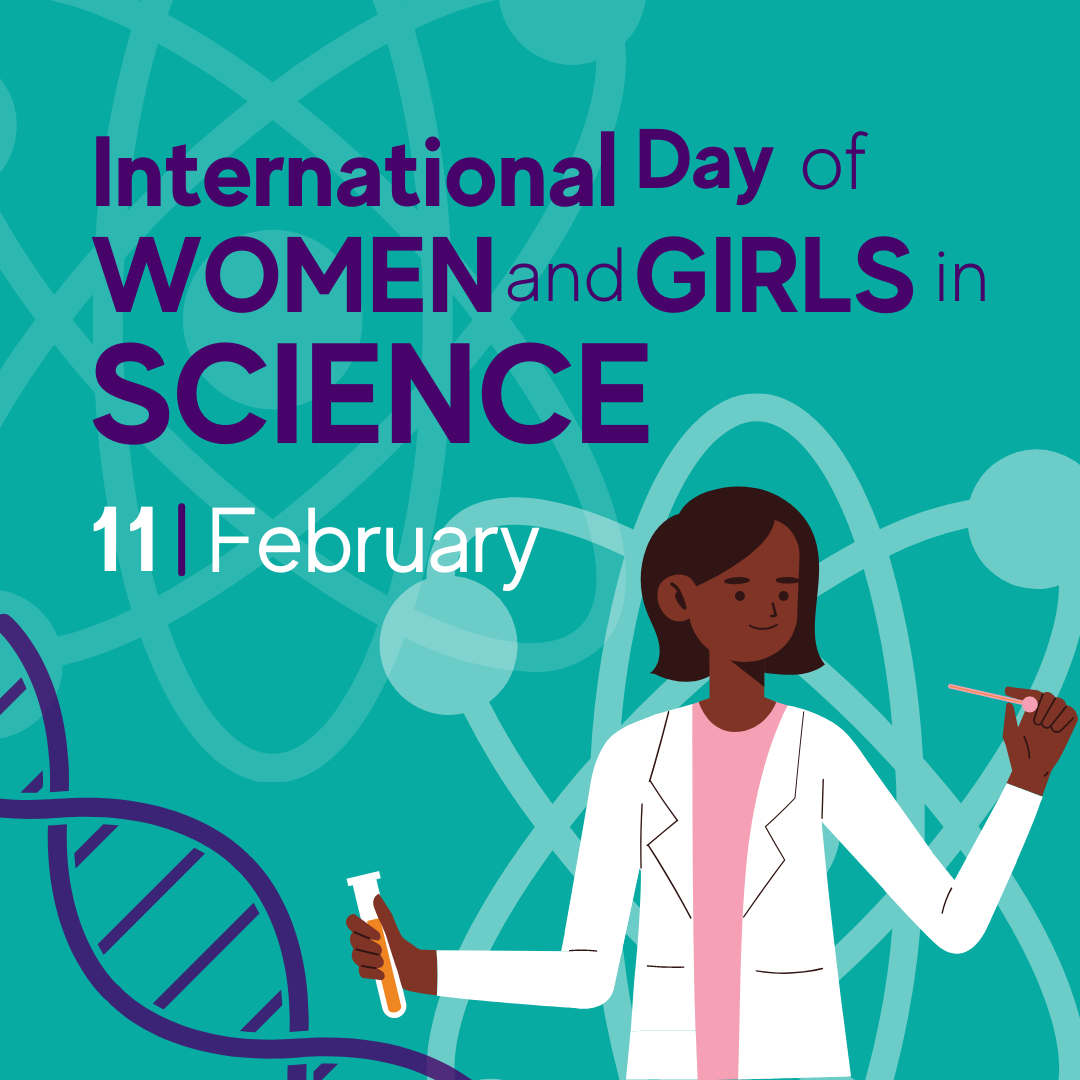
On 11 February 2026, the Amman Center for Human Rights Studies (ACHRS) joined gender equality advocates across the world in commemorating the International Day of Women and Girls in Science, a day dedicated to promoting the full and equal access in science for women and girls.
At ACHRS, we believe that the education of women and girls is not just necessary for their individual economic and social development, but that such development can also contribute to regional development, peace, and security. This belief can be confirmed by our priorities and activities which seek to advance gender equality within the Arab Region.
Progress has been made in the education of women and girls, and this is evident in the fact that there are more girls in school than ever before. Access to school alone does not result in girls completing their education, and studies have found that in the region, 1 in 5 girls in primary school and 1 in 3 girls in lower secondary school do not complete their education. This all but excludes girls and women from the sciences.
Other concerning relevant statistics from the region are:
- 10.9 million girls are out of school compared to 9.5 million boys
- 11 million girls do not achieve proficiency levels in reading and maths
- Only 64% of women in the Arab Region use the internet, compared to 75% of men
- Only 8 countries in the region have legal frameworks that advance gender equality, and
- Only 24% of senior management positions in science and engineering are held by women.
Women and girls represent half of the Arab Region’s population, and by extension, half of its potential. Despite this, and the progress made towards gender equality, women and girls continued to be denied access and opportunities, including in science, that would result in their collective advancement. ACHRS therefore calls on all states in the Arab Region to:
- Invest in physical and digital infrastructure so as to ensure that girls have access to education that will allow them to pursue opportunities in science
- Invest in programmes that promote access to education for girls
- Invest in the training and employment of teachers, especially in STEM subjects
- Create and implement laws that advance gender equality, and
- Eliminate all policies and practices that discriminate against women and girls.
Click here to read about the impact of women in science.

![Catholic clergy take part in a procession during Easter Mass at the Church of the Holy Sepulchre in Jerusalem's Old City [File: Ahikam Seri/Reuters] in https://www.aljazeera.com/podcasts/2024/3/29/the-take-the-meaning-of-easter-in-palestine](https://achrs.org/english/wp-content/uploads/2024/04/Easter-Palestine-220x150.webp)