Digital Literacy Among Youth: From Technical Empowerment to the Right to Knowledge
By Salma Ismail
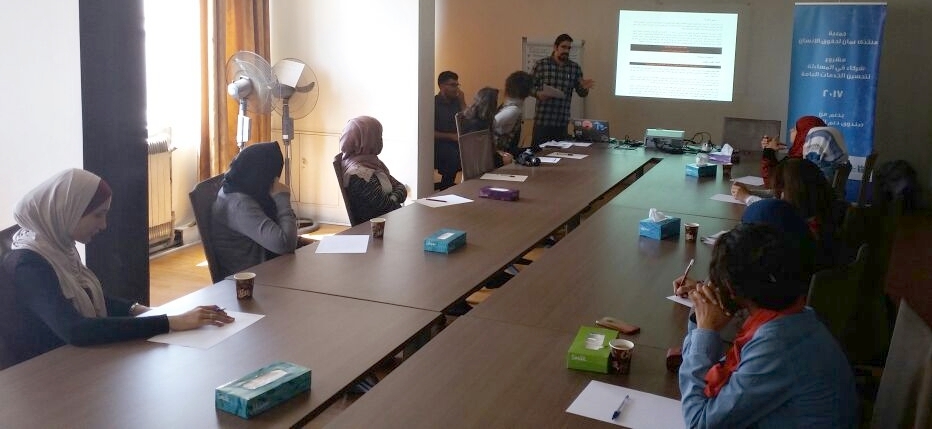
The Amman Center for Human Rights Studies (ACHRS) established its Digital Youth Rights Unit last year, and since then the unit has organized numerous seminars addressing these very issues. The unit’s objectives are: first, raising youth awareness of their digital rights; second, examining the challenges and opportunities facing young people in the age of artificial intelligence; third, addressing the risks that social media pose to youth rights and digital security; and fourth, promoting digital security among young people.
Illiteracy today is no longer limited to the inability to read and write. It now extends to a new dimension driven by rapid technological change: digital illiteracy. The ability to use smart devices and the internet effectively and safely has become a basic condition for participating in economic, social, and political life much like reading and writing were a condition for integration into society in the past century. From this standpoint, the Amman Center for Human Rights Studies (ACHRS) is paying close attention to the issue of digital literacy among youth, viewing it as a natural extension of the right to education and the right to access information both of which are core rights enshrined in the Universal Declaration of Human Rights.
What Is Digital Literacy?
Digital illiteracy refers to a person’s lack of the basic skills needed to use digital tools and technologies from the basic use of computers and smartphones, to searching for information and evaluating its credibility, to participating safely in the digital space and protecting personal data. Digital literacy, then, is the process of equipping individuals especially young people with these skills, enabling them to integrate into the knowledge economy and the growing digital job market, and to practice digital citizenship with awareness and responsibility.
The Reality of Jordanian Youth and the Digital Divide
Available data paints a mixed picture of the situation of Jordanian youth in this field. On one hand, Jordan has made noticeable progress in digital infrastructure and policy, ranking third in the Arab world and 29th globally on an index measuring AI adoption among the working-age population. On the other hand, a clear gap remains between the opportunities available and young people’s actual readiness. According to statements from the Information and Communications Technology Association (“INTAJ”), only about 46% of Jordan’s youth fall within the age group theoretically qualified to engage in the digital economy meaning a large share of the country’s youth potential remains outside this system or unprepared to fully benefit from it.
A recent national study by the Digital Skills Association also reveals an additional, qualitative gap: Jordan’s ICT sector workforce reached approximately 47,840 workers in 2025, yet women made up only 33% of them, and their representation in leadership positions did not exceed 4%. This indicates that the digital gap is not purely a generational or technical one it is also a gender gap that deserves particular attention from a rights-based perspective.
These readiness gaps are visible earlier than the job market, at the level of basic access. UNICEF reports that Jordan’s ICT sector already accounts for 12% of GDP and that the economy needs an estimated 66,000 new ICT-related jobs each year, yet more than 16% of students in Jordan lack internet access altogether, and roughly a third do not have a computer they can use for schoolwork. The same disparity repeats along gender lines: UNICEF data across dozens of low- and middle-income countries shows adolescent girls and young women are consistently less likely than boys to be online or to own a mobile phone a global pattern that mirrors Jordan’s own gender gap in ICT employment and leadership.
At the same time, government efforts show a clear push toward accelerating digital transformation, through initiatives such as “Youth, Technology, and Jobs,” which has already trained thousands of participants, alongside the digitization of a large share of government services. However, the success of these initiatives depends heavily on whether they reach the most marginalized groups: youth in rural areas and camps, persons with disabilities, girls in conservative communities, and refugee youth, who face additional barriers to accessing devices and internet connectivity. UNICEF Jordan’s own digital-inclusion programs illustrate both the need and the possible response: through its Makani centres, the organization has distributed thousands of tablets with data plans to vulnerable Jordanian, Palestinian, and Syrian refugee households, alongside targeted digital-skills training for young women, out-of-school youth, and refugees in governorates such as Madaba, Tafileh, Irbid, Zarqa, and Amman.
From a rights-based angle, the discussion of digital literacy cannot be separated from several fundamental rights. Education today is deeply dependent on digital tools, from e-learning to access to open educational resources, which means excluding any group from these tools amounts to a compounded form of educational exclusion. The digital space has also become the widest arena for the circulation of information and opinion, and lacking the skills to engage with it critically weakens young people’s ability to participate actively and thoughtfully in public affairs, touching directly on the right to access information and freedom of expression. The right to work is affected as well, since a changing labor market increasingly demands digital skills as a basic condition for employment, turning digital illiteracy into a factor of economic and social exclusion. Safe digital citizenship also connects to the right to privacy and data protection, requiring awareness of risks such as exploitation, online harassment, cyberbullying, and fraud issues that directly affect young people.
Several challenges stand in the way of closing this gap. A persistent disparity in infrastructure remains between urban and rural areas in terms of internet quality and device availability, compounded by a gender gap in which girls and young women continue to have fewer opportunities to acquire advanced digital skills and take on leadership roles in the sector. There is also a lack of critical skills, as digital literacy efforts often focus on consumption-oriented technology use without building the critical thinking needed to evaluate information and counter digital misinformation. This is made harder by the limited integration of digital skills into curricula, with no clear, sustained pathway for embedding them into formal and non-formal education, and underlying all of this is the particular vulnerability of marginalized groups, as refugee youth, persons with disabilities, and rural communities remain the most exposed to digital exclusion.
Addressing these challenges calls for a set of concrete steps. Critical digital citizenship skills fact-checking, countering online hate speech, and protecting personal data should be integrated into youth training programs rather than focusing solely on technical skills, and targeted programs are needed to close the gender gap in digital skills, including encouraging young women to pursue technical leadership pathways. Part of these training efforts should be directed toward the most vulnerable groups, particularly refugee youth and rural communities, through partnerships with relevant local and international organizations. Digital literacy programs should also be framed within a human rights approach, going beyond technical training to include awareness of rights and responsibilities in the digital space, and partnerships between civil society organizations, government bodies, and the private sector should be strengthened to expand the reach and sustainability of training programs.
Digital literacy among youth today represents both a developmental and a human rights imperative. It is a key gateway to empowering an entire generation to participate actively in the economy and society, and a safeguard against the digital divide becoming a new divide in rights and opportunities. In this spirit, the Amman Center for Human Rights Studies’ continued engagement with this issue, and its contribution to youth digital empowerment programs, reflects its broader mission of promoting a culture of human rights and building the capacity of young generations to participate consciously and responsibly in public life.
References
- Al Mamlaka TV. “Intaj”: 46% of Youth in Jordan Fall Within the Age Group Qualified to Engage in the Digital Economy, November 18, 2025. https://www.almamlakatv.com/news/183598
- Al Mamlaka TV. ICT Experts: Jordan Is Witnessing a Real Shift in Digital Culture, November 1, 2025 (on Jordan’s ranking in AI adoption). https://www.almamlakatv.com/news/182350
- Petra News Agency. Jordan Ranks Third in the Arab World in AI Adoption Among the Working-Age Population, October 31, 2025. https://www.petra.gov.jo/Include/InnerPage.jsp?ID=38610&lang=ar&name=economic_news&cat=news
- Sarahnews. National Study Maps Jordan’s Digital Skills Market and Reveals a Supply-Demand Gap, Digital Skills Association, December 15, 2025. https://www.sarahanews.net/1257177-دراسة-وطنية-ترسم-ملامح-سوق-المهارات-الرقمية-ال/
- Royya News. Jordan Digitizes 80% of Government Services and Issues 2 Million Digital IDs in 2025 (on the “Youth, Technology, and Jobs” initiative), February 14, 2026. https://royanews.com/%D8%A7%D9%84%D8%A3%D8%B1%D8%AF%D9%86-%D9%8A%D8%B1%D9%82%D9%85%D9%86-80-%D9%85%D9%86-%D8%A7%D9%84%D8%AE%D8%AF%D9%85%D8%A7%D8%AA-%D8%A7%D9%84%D8%AD%D9%83%D9%88%D9%85%D9%8A%D8%A9-%D9%88%D9%8A%D8%B7%D9%84/
- United Nations. Universal Declaration of Human Rights, 1948 (Articles 19, 23, 26). https://www.un.org/en/about-us/universal-declaration-of-human-rights
- UNICEF Jordan. Innovative Solutions to Bridge the Digital Divide. https://www.unicef.org/jordan/reports/innovative-solutions-bridge-digital-divide
- UNICEF. Tech Trailblazers: Jordan. https://www.unicef.org/stories/tech-trailblazers/jordan
- ODI / GAGE (UNICEF-commissioned research). Tackling Digital Exclusion Among Disadvantaged Adolescents in Jordan, 2022. https://gage.odi.org/wp-content/uploads/2022/01/Tackling-digital-exclusion-among-disadvantaged-adolescents-in-Jordan_final-3.pdf
- UNICEF Data. Bridging the Gender Digital Divide. https://data.unicef.org/resources/ictgenderdivide/
By Salma Ismail, Digital Youth Rights Unit, ACHRS