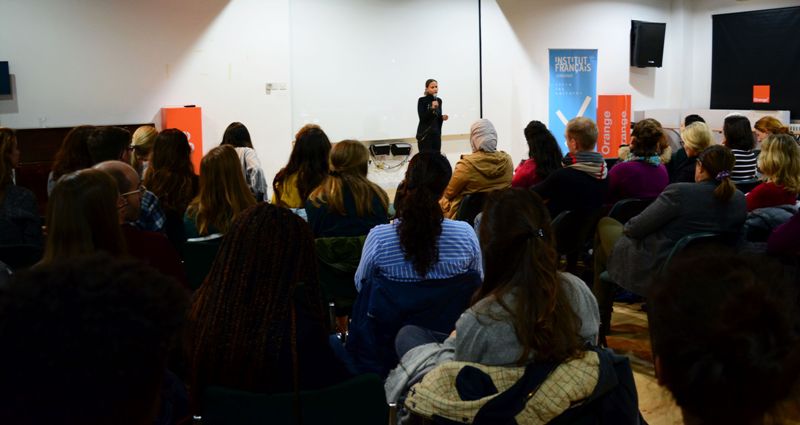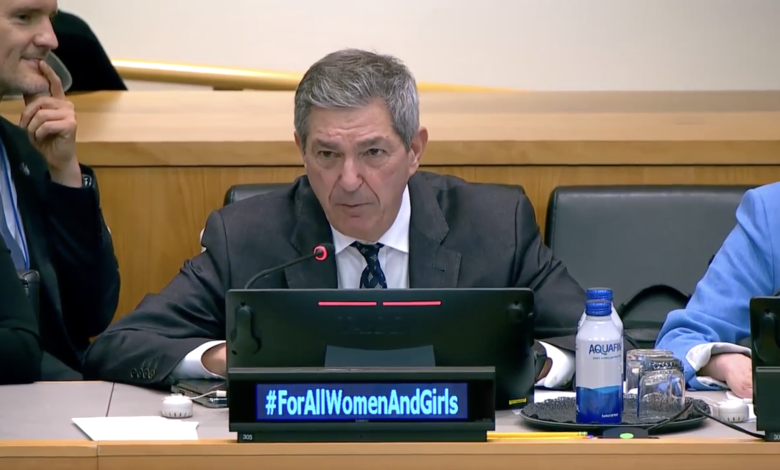
The High-Level CSW69 Side Event of the Group of Friends for the elimination of violence against women and girls was held on March 13. The dialogue included interventions from country delegates, experts and representatives of NGOs in order to take stock of the progress made since the implementation of the Beijing conference, identify remaining gaps and discuss how they can be bridged. It also explored the challenge of accountability and the difficulty of ensuring it today.
Moderators and delegates emphasized a major point: one in three women experiences violence or sexual violence in her lifetime, highlighting that this is not merely a women’s issue but one that shapes the foundation of society as a whole. Dr. Kemi DaSilva-Ibru intervened during the dialogue, stating that the cost of inaction is significant: governments lose up to 4% of their GDP due to violence against women. Addressing this issue is not only a human rights imperative but also an economic necessity. Consequently, they concluded that substantial change is needed to dismantle the deeply rooted violent structures women live within. The United Nations has set the goal of eliminating violence against women and girls by 2030. To achieve this necessary change, three key strategies for holding responsibility were developed.
Firstly, by strengthening the union between governments and society in order to integrate relevant prevention strategies through education, health or justice, ultimately reducing intimate partner violence. Secondly, by investing in feminist movements with sustaining funding. Today, feminist movements are underfunded, preventing the emergence of strong, autonomous initiatives. According to OECD data, funding for women’s rights organizations and feminist movements remains persistently under 1% of Official Development Assistance (DOA) for gender equality, limiting their local impact. A panelist spoke on behalf of the Youth Leader for Generation Equality, explaining the Disaster Reduction Plan Project in Brazil, which aims to prevent children from missing weeks of school after natural disasters. She emphasized the urgent need for funds to implement this project. Additionally, Leyla Zuleikha Makhmudova, an advocate for civil society and justice representing Central Asia, highlighted the withdrawal of commitment from former allies in gender justice and anti-violence efforts. She also pointed out that international assistance often lacks local awareness – what works in one area might not work in another. To provide specialized and effective support, she underscored the importance of relying on grassroots activist movements.
Last but not least, strengthening accountability is crucial. The numbers speak for themselves: less than 10% who experience violence report it to the police, perpetuating a culture of impunity. In addition to identifying key strategies, the dialogue also acknowledged the slow progress made and highlighted initiatives from different countries aiming to combat violence against women and girls.
Representatives and delegates were invited to speak about the progress made at the local level. The European Union delegate first talked about the Spotlight Initiative, a program in collaboration with the United Nations, which aims to address the needs of all women and girls – particularly those experiencing multiple and intersecting forms of discrimination and violence. According to the representative’s program, it has prevented 21 million girls and women from experiencing gender based violence. Naima Ben Yahia, Minister of Solidarity, Social Inclusion and Family in Morocco underlined the initiatives implemented in her country in order to eliminate violence against women, especially since the issuance of the first national strategy in 2002. One of the main actions has been the establishment of reception and guidance centers, ensuring the provision of legal and health services in various regions of the Kingdoms, including rural areas. Morocco also created an electronic platform dedicated to counseling and offering psychological support.
The Turkey delegate highlighted the need to include every woman in the fight for gender equality, including women in war zones. She emphasized the urgency of assisting Gazan women suffering under Israeli oppression. The French delegate praised the fight for gender equality as one of the top priorities of president Macron’s agenda. She mentioned the implementation of a helpline operating seven days a week to support women in need, adding that France has increased the number of emergency accommodation places by 80%. However, this statement requires nuance. According to Le Nouvel Observateur, Macron’s commitment to women’s rights has been inconsistent: “It’s the top priority as long as it doesn’t disturb anyone. But as soon as it conflicts with another interest — a famous actor, public finances, businesses — he always sides with the other party. Women’s rights always come second.”.
Amina J. Mohammed, Deputy Secretary-General of the United Nations delivered a video message to conclude the dialogue. She reflected on the 30 years since the Beijing Conference, noting that while some progress has been made, it remains insufficient. The current crisis of trust in the multilateral system creates significant barriers to advancing women’s rights. She emphasized the need to financially support NGOs working within their communities and to ensure that no woman or girl is left behind. Achieving this goal requires collaboration between governments, civil society and the private sector.