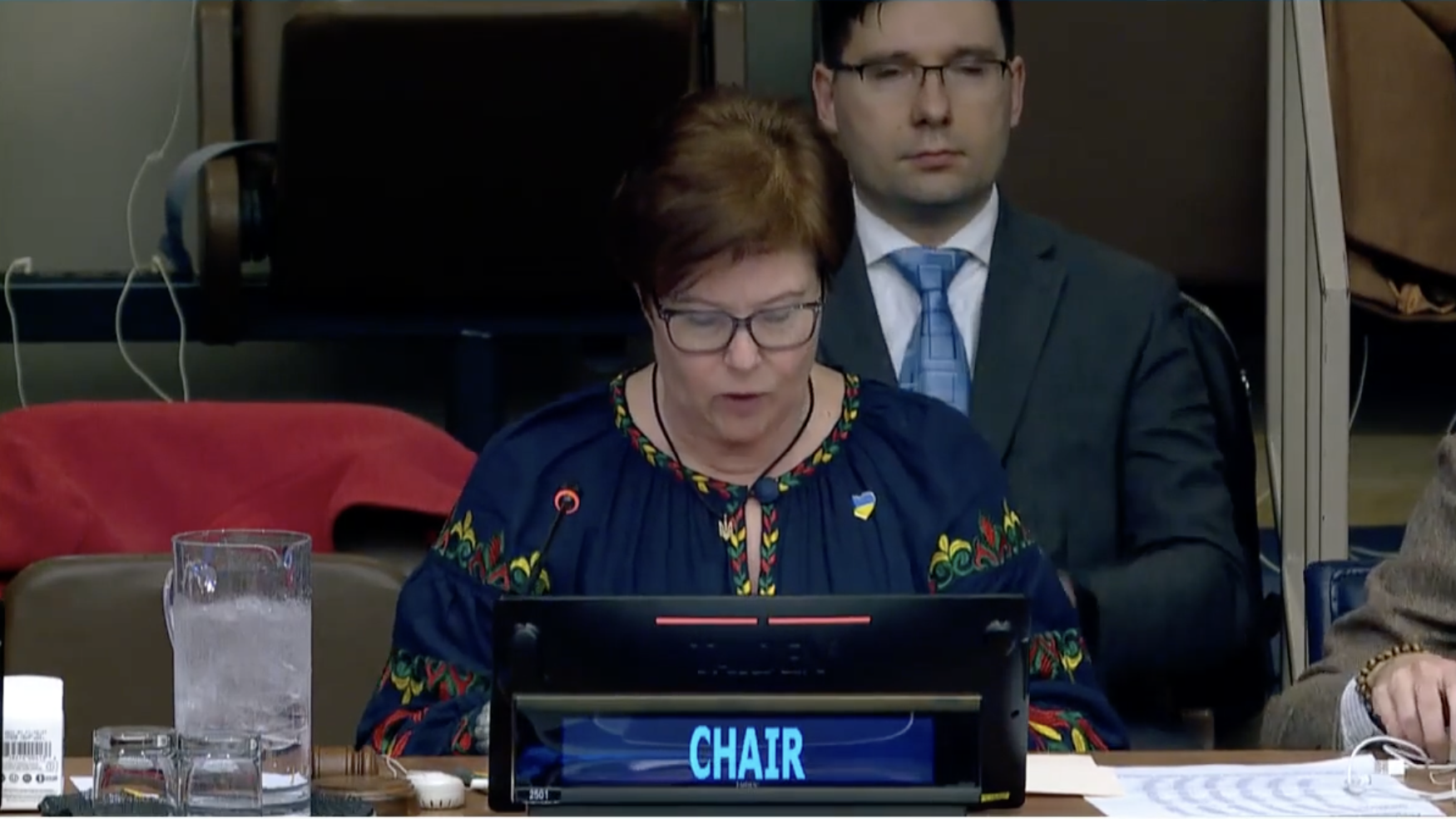
The 11th plenary meeting was held on the 14th of March, reviewing the Beijing Declaration and Platform for Action implemented 30 years ago. During this dialogue, country delegations and representatives of NGOs were invited to assess the reality of its implementation, while suggesting actions to address ongoing issues such as gender based violence, access to education and economic empowerment.
In 1995, 189 governments agreed to adopt the Beijing platform for action, a framework with more than 17,000 participants aiming to achieve gender equality and empower women and girls. It has driven important change in several countries – for example, in Mali, where the delegate highlighted how young men and women are playing an active role in changing society through NGOs or entrepreneurship. Administrative measures have been implemented to ensure girls in rural places can access education. However, these advances remain insufficient. For instance, the quota law guaranteeing a percentage of women and young people in decision-making posts, faces backlash from some parts of the population.
Thus, this meeting perfectly highlighted what Sima Bahous, Undersecretary and Executive Director of UN Women, emphasized: while the Beijing Declaration has led to stronger laws against gender-based violence, progress is slow and remains uneven. Several delegates and activists referred to the UN reports indicating that complete gender equality would take no less than 130 years to achieve, underscoring the long road ahead.
Uneven progress
One of the key subjects of this dialogue was the uneven progress to gender equality. Delegates and representatives warned about the importance of including all kinds of women, pointing out how the current scheme tends to exclude some of them. Eva Chukwunelo, a peer counselor at a mobility clinic, emphasized that the world is not designed for women with disabilities. She reflected on how this issue is difficult to tackle due to insufficient data showing how women with disabilities are left behind, concluding “If you are not counted, then you don’t count”. Thus, the lack of data plays a major role in hindering the development of relevant solutions. She advocates that solutions cannot be provided without data and stresses the necessity of including all women in the fight against gender inequality. Other minorities such as indigenous women face systematic discrimination, displacement, said Laura Huertas, human rights activist for indigenous people and territory, reminding the importance of the Beijing+30 for indigenous women to gain ground.
Those interventions highlight how women at intersections of multiple forms of discrimination – racism, poverty, sexism – are often overlooked. In short: move beyond western-centered conceptions of gender and acknowledge the unique challenges faced by those living at intersections of multiple forms of oppression. In conclusion, as the South African delegate quoted Nelson Mandela herself: “freedom cannot be achieved unless women emancipated from all forms of oppression”.
Additionally, representatives from Plan International criticized the failure of the Beijing conference’s first objective, which promised that no women would be left behind, arguing that women in times of war are very often forgotten in dialogues. They referred to the ongoing conflicts in Lebanon, Gaza, Soudan and Ukraine. The delegate of Syrian Arab Republic also mentioned Syrian women being victims of both the dictatorial regime and armed factions, but they have continued resisting, though still waiting for greater acknowledgement. They called for more consideration of women in conflict in policies, stating that Beijing +30 should not be merely a memorial, but rather a turning point to address the needs of women in conflict.
Possible solutions
Possible solutions were discussed in order to provide better implementation of the Beijing Declaration. The Albanian activist highlighted the importance of localizing the Declaration to ensure it meets its goals. Governments must collaborate to implement concrete actions at the local level. Additionally, Ahdithya Visweswaran, the Governance Coordinator for the Young Diplomats of Canada, emphasized how men must play their part by reconceptualizing their roles as active participations in addressing patriarchal violence. He also stressed the importance of socializing to fight against toxic masculinity.
Lastly, Sima Bahous reminded the power of youth to lead the fight for gender equality. As highlighted by the delegate from Saudi Arabia, it is important to recognize the role of youth in shaping the future. The delegate emphasized the significant efforts Saudi Arabia has made in empowering its young population, which represents 36% of the total population. These efforts are not only aimed at improving economic opportunities but also at ensuring the active participation of youth in leadership roles and societal change.