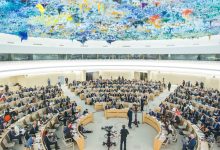
An international conference in the frame of the "Iraqi Civil Society Initiative" was held in Velletri (Italy) from 25 to 30 March 2009. Doctor Nizam Assaf, Director of the ACHRS, had the pleasure of participating in the conference as a panel facilitator.Almost one hundred people took part in the conference: 39 participants from Iraq, 55 international participants, and 5 staff members.
The aim of this conference was to discuss the challenges that the challenges faced by Iraqi civil society in working to build a free and democratic Iraq, to strengthen alliances and improve cooperation.
Here you can find the final report in English.
FINAL REPORT
1. Trade unionists, activists for human rights and for women’s rights, members of Youth and students unions, members of Ngos, representatives of minorities, women and men, citizens of Iraq and from the international community, including America, Europe and Asia, gathered in Velletri from 25 to 30 March 2009. This was to discuss the challenges that the Iraqi civil society is faced with in continuing to build a free and democratic Iraq, to strengthen alliances and improve cooperation.2. We have first of all recognized that in Iraq there exists a vibrant Civil Society which is active and committed to the deep problems that still affect Iraq after six years of occupation: grave humanitarian situation, illiteracy, lack of liberties, violation of human rights, violation of workers right, political sectarianism. 3. The Iraqi civil society is composed of thousands of organisations, networks, and volunteers who are committed to confronting all these problems daily with proposals, projects, campaigns, lobbying, demonstrations, rallies, cultural initiatives. Iraqi civil society deserves to have this place on the international stage as an important actor in improving the Iraqi situation and receiving concrete support from the international civil society. 4. The CSOs activity is affected by many factors: violence, political problems, political sectarianism of the society, and weakness of organizational experience. Freedom of association, of gathering, of establish trade union, of the media are still not guaranteed in Iraq. We are worried of this because these freedoms are the core of democracy. 5. During these days all major challenges for a sovereign and democratic Iraq have been deeply discussed by Iraqi and between international and Iraqi participants. Discussion has been concrete and differences have enriched the debate. On this basis Iraqi CSOs will continue their work improving cooperation and developing initiatives. 6. Out of the discussions the international participants gained a deeper knowledge of the Iraqi situation that will enable NGOs and activists of Europe, Asia and America to develop more effective solidarity actions to reinforce global support for the work of Iraqis. Another major outcome was the building of reciprocal knowledge and trust, and the establishment of contacts for future joint actions.On this basis the participants has proposed a list of joint actions to be developed in the future and will expand this networks and built new alliances by inviting more Iraqi and international organisation to participate to the process of the Iraqi Civil Society Solidarity Initiative.Support through international raising awareness campaigns on issues identified by Iraqis as– International petition for freedom of association and on NGO Law– Campaign for advocate for workers rights and for the abolition of law 150 that limit the workers write to establish trade unions.– Campaigns for improve the women’s position in the society and for the abolition of the art. 41 of Constitution in order to eliminate all legislative obstacle to gender equality.– Constitution of the Human Rights Defenders union– Promote the role of youth in the decision centres.Cooperation to the capacity building of Iraqi CSOs– Trainings on specific issues identified by Iraqis– Support for activating direct contacts with donors and understanding how to approach themDevelop projects and networks for Peace building, non-violence and internal reconciliation processes and other key concerns identified by IraqisIn order to strengthen the communication:– To develop a Internal Social Website for Iraqi Civil Society Solidarity Initiative, in English and Arabic.– To establish workgroup e-mail lists (on privatization, peace building, etc)– Develop networking and continue the process for the organisation of an Iraq Social Forum
Velletri, March 30th 2009