ACHRS Statement: prolonged Detention of Human Rights Activist Osman Kavala
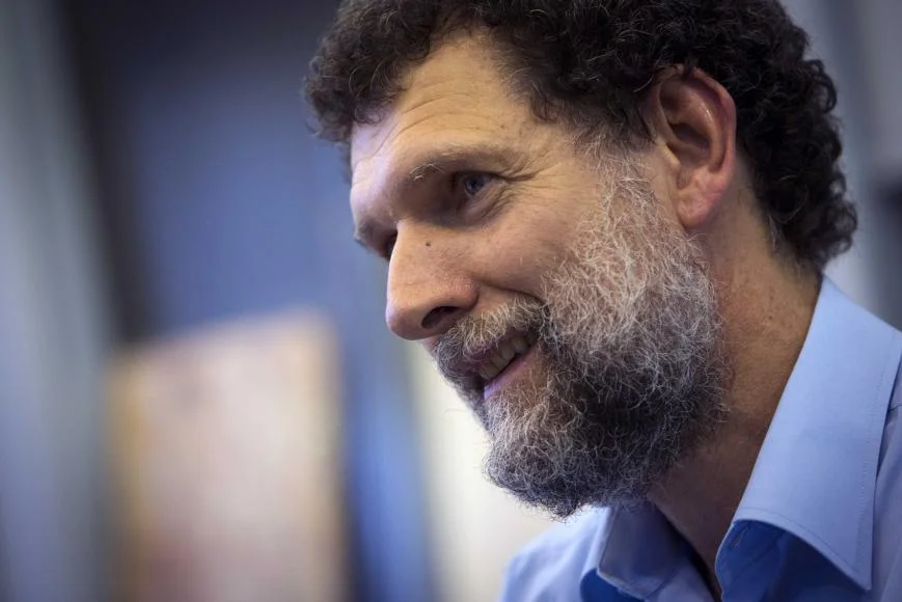
A Turkish court has extended the detention of human rights defender Osman Kavala. This decision is opposed to the European Court of Human Rights’ judgement calling for Kavala’s release. Amman Center for Human Rights Studies condemns the extension. We urge the Turkish authorities to stop the arbitrary imprisonment of Turkish dissidents and to respect the judgments of the European Court of Human Rights.
Download our full statement or view as PDF
Osman Kavala has been in pretrial detention since November 2017, where he was placed without trial. On October 8, 2021, a Turkish court extended his detention by setting a hearing for November 26. Kavala risks life in prison if convicted. Tried with 51 defendants, he is accused of espionage, membership in “terrorist” groups, seeking to overthrow the government in the 2016 coup attempt, and of having contributed to the growth of the Gezi Park protests in 2013. He is a 64-year-old Turkish philanthropist, human rights defender, promoter, and editor who has been working for the Armenian and Kurdish cause. He also campaigned for the “no” vote in the April 2017 constitutional referendum on strengthening the powers of the president.
In a statement issued on October 18, 2021, 10 countries including France, Germany and the United States called for a “fair and swift settlement of the case,” arguing that “the persistent delay in his trial casts a shadow over respect for democracy, the rule of law and the transparency of the Turkish judicial system.”
On December 10, 2019, the European Court of Human Rights declared in a ruling that Osman Kavala had remained arbitrarily detained in Turkey since November 2017. The court ruled that his detention had been executed and prolonged in bad faith for illegal purposes, in violation of the European Convention on Human Rights, and that he should be released immediately: “The Court considers that the government must take all necessary measures to put an end to the detention of the applicant and to proceed to his immediate release.” It denounced a desire to “reduce Osman Kavala to silence and with him all human rights defenders.” In its judgment, the court points out a series of violations of the European Convention on Human Rights, such as the rights to “liberty and security” and “a prompt decision on the legality of his detention.”
On October 3, 2020, the audience of the Committee of Ministers to evaluate the execution of the judgment of the European Court of Human Rights in the case of Osman Kavala had ordered the Turkish authorities “to ensure the immediate release of the applicant”, underlining “a strong presumption that his current detention is a continuation of the violations found by the Court.”
Nils Muižnieks, Director for Europe at Amnesty International, said: “Osman Kavala and Selahattin Demirtaş have been deprived of their liberty arbitrarily and unjustly for years, despite binding rulings by the European Court in favor of their release.” Amnesty International considers that “the detention prolongation of Osman Kavala and Selahattin Demirtaş discredits President Erdogan’s Human Rights Action Plan.” The Council of Europe announced on Friday, September 17th that it would launch an infringement procedure against Turkey in November for its failure to implement the ruling of the European Court of Human Rights.
Incarceration in the absence of a fair trial is a violation of the International Covenant on Civil and Political Rights ratified by Turkey in 2003. This arbitrary detention is also a violation of Article 6 of the European Court of Human Rights, of which Turkey is a member state.
Amman Center for Human Rights Studies condemns the prolonged pretrial detention and use of repression against human rights activist and defender Osman Kavala. We condemn the repression of political dissidents by the Turkish authorities, as well as the violation of the judgments of the European Court of human rights and international laws. We urge the Turkish authorities to release Osman Kavala.
Image Source: Human Rights Watch