ACHRS commemorates International Day for the Eradication of Poverty, calling on an end to inequality in the Arab world
By Victoria Rebok
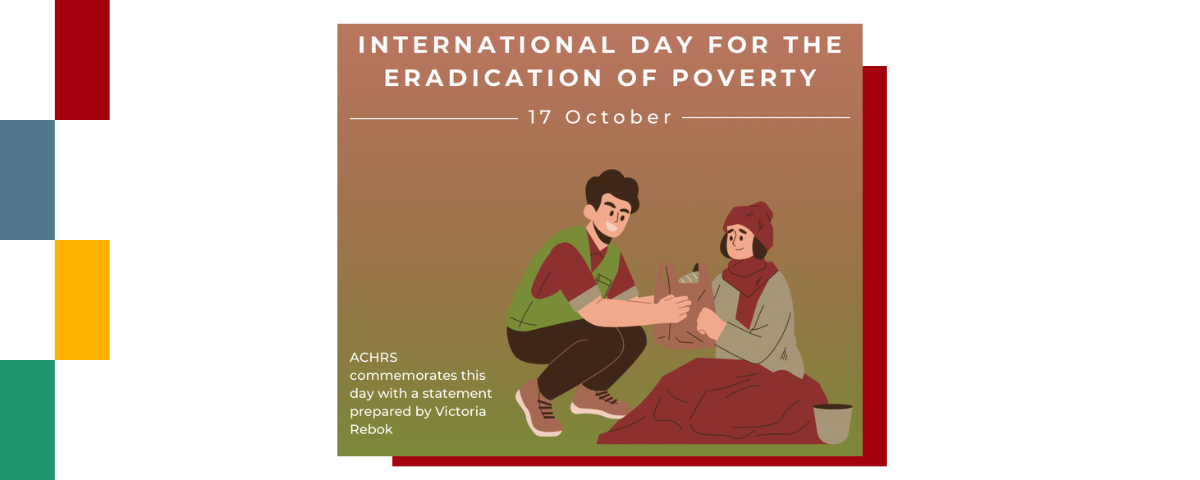
The Amman Center for Human Rights Studies (ACHRS) joins the international community in commemorating the International Day for the Eradication of Poverty, held annually on 17 October. First celebrated in 1987 under the name ‘World Day to Overcome Poverty’, this day recognises that ending poverty is inseparable from protecting human rights, human dignity and peace.
While poverty remains a universal struggle, its impacts are particularly acute in the Arab world. It is estimated that roughly 250 million people– about 66% of the region’s population– are either living in poverty, or are highly vulnerable to it. This makes it one of the most poverty-affected regions in the world. Even more concerning is the long-term trend: the Arab world is the only region where extreme poverty has increased since 2010. Measured at a daily line of $3.00, extreme poverty in the region has grown from 4% in 2010 to 8.6% in 2021. Syria and Yemen account for much of this increase and remain among the region’s poorest countries. Their situations illustrate a key driver of poverty across the region: conflict. Yemen is a stark example of its devastating impact on well-being: the share of the population living below the poverty line has risen from 19% before the war began in 2014, to 80% today.
Yet poverty trajectories across the region are not linear. In contrast to much of the region, most Gulf Cooperation Council (GCC) countries have seen declines in poverty. In Saudi Arabia, for instance, poverty fell from 18.2% in 2010 to 13.6% in 2021. This illustrates a key feature of poverty in the Arab world: inequality. The wealthiest 10% own over 60% of the region’s wealth, making it one of the most unequal wealth distributions globally, with much of this wealth concentrated among affluent elites in oil-rich Gulf states. In these countries, inequality is also shaped by the traditional Kafala system, which traps millions of migrant workers in cycles of financial vulnerability and widens the gap between foreign workers and citizens. Across the rest of the region, employment structures also contribute to inequality, with 65% of the workforce engaged in informal work.
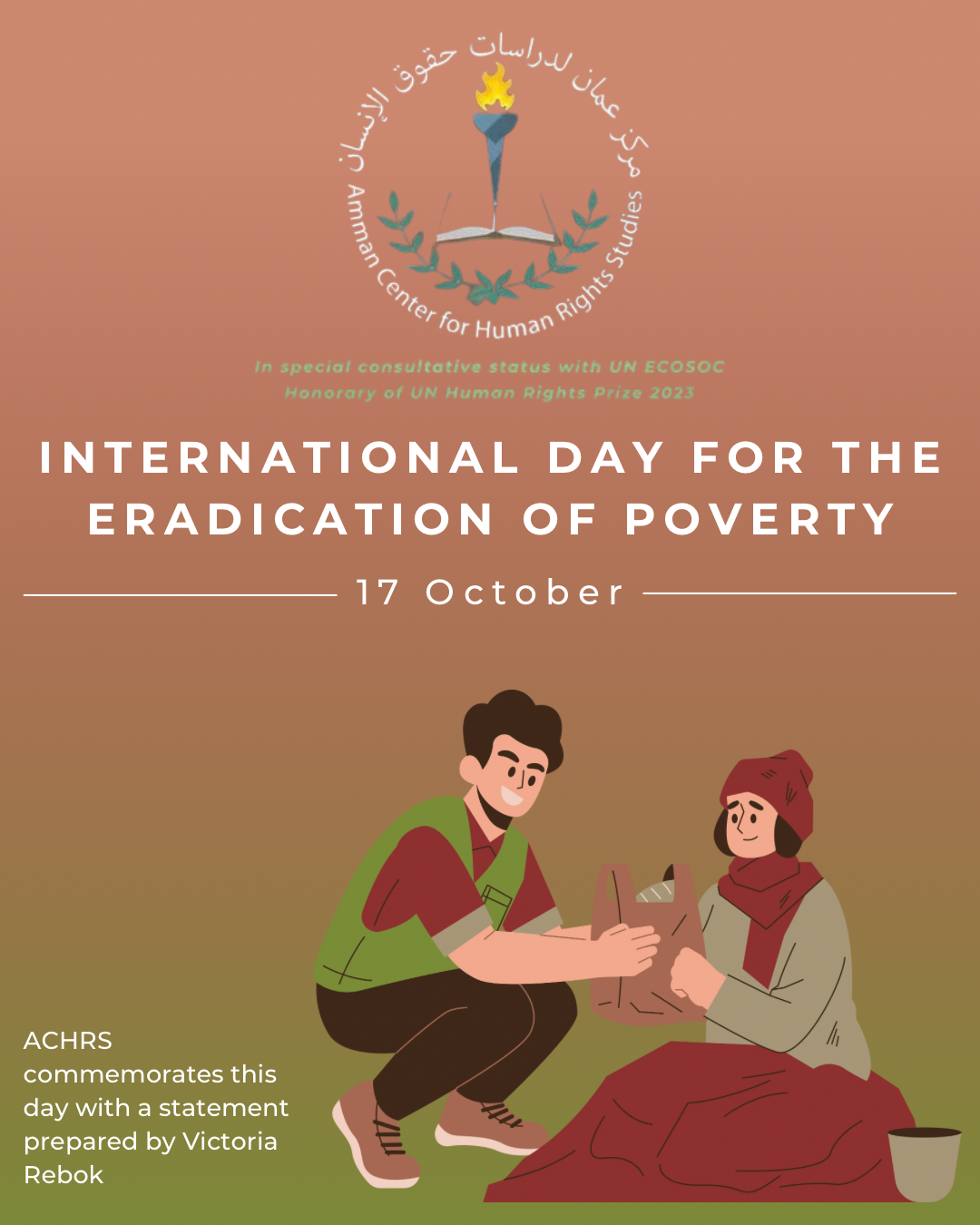
This year, the International Day for the Eradication of Poverty centres on “Safe Homes for All”– a particularly pertinent theme for the Arab world, where an estimated 81 million people live in informal settlements, overcrowded quarters, or inadequate housing. Once again, conflict is a major driver of this insecurity: the region hosts over 31 million forcibly displaced people, many of whom face precarious housing conditions.
On this International Day for the Eradication of Poverty, the Amman Center for Human Rights Studies (ACHRS) calls on the international community to renew its commitment to the first Sustainable Development Goal (SDG 1): No Poverty. ACHRS urges concerted action to eradicate poverty in the Arab world by:
- Ending armed conflicts and ensuring the right of refugees and displaced persons to return to their homes in safety and dignity;
- Tackling inequality by promoting a fairer distribution of wealth and strengthening labour protections through equitable and inclusive labour laws;
- Expanding social protection to ensure that the most vulnerable are not left behind.