Human Rights Council: Biennial panel discussion on youth and human rights – Summary
Written by Roaa Hanieh
UN General Assembly
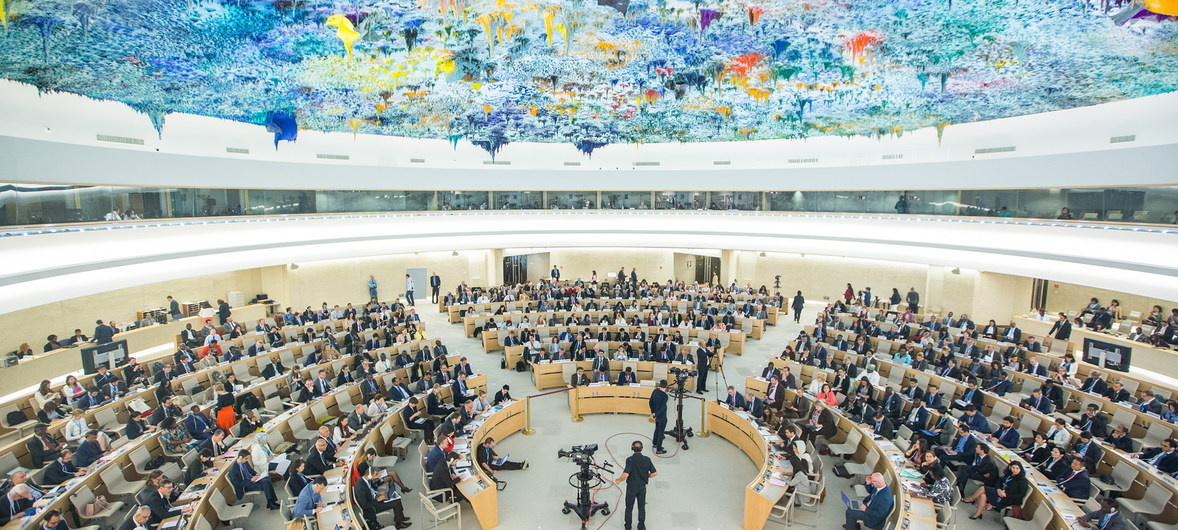
The Human Rights Council decided to hold a regular panel discussion on youth and human rights. The focus of the latest discussion was the role of young people in building peaceful societies and creating an environment where everyone can enjoy their human rights.
The panel aimed to highlight the important leadership role of youth, discuss the challenges they face in participating safely and meaningfully, and share good practices to support and empower them. The discussion was held on 16 September 2025 with the participation of officials and youth representatives.
Summary of proceedings
The United Nations Deputy High Commissioner for Human Rights emphasized that young people are not only future leaders but also active contributors to the present, despite their voices often being overlooked even though they represent a significant portion of the global population. The Deputy High Commissioner highlighted the devastating impact of armed conflict and repression on youth, particularly in the Occupied Palestinian Territory, Sudan, and Ukraine, as well as the increasing attacks on education and restrictions on freedom of expression. The Deputy High Commissioner also noted the dual role of technology in young people’s lives, offering valuable opportunities while exposing them to risks such as cyberbullying, which underscores the importance of digital safety and equitable access to the Internet. The Deputy High Commissioner stressed that youth cannot effectively promote human rights if their own rights are not respected, and although they face limited political representation, young people continue to lead movements and drive social change. The Deputy High Commissioner further pointed out that youth inclusion has become a priority within the United Nations through various global frameworks and initiatives aimed at strengthening participation and capacity-building. Governments were encouraged to collaborate with young people, remove structural barriers, and create enabling environments that ensure meaningful participation in decision-making. Finally, the Deputy High Commissioner acknowledged the significant contributions of young people to peacebuilding, justice, and social development worldwide, while noting that many young leaders and human rights defenders, particularly those from marginalized communities still face substantial barriers, making it essential to move beyond symbolic recognition toward genuine power-sharing and meaningful engagement.
The panel presentations highlighted the transformative potential of youth participation at local, national and international levels, while underscoring the structural barriers that continue to limit inclusive engagement, including adult-centrism and the exclusion of Indigenous youth, young women, persons with disabilities, rural communities and ethnic minorities from decision-making processes. Practical models of meaningful participation were presented, demonstrating the importance of creating safe spaces, protection mechanisms and structured dialogue between young people and public authorities. Strengthening youth knowledge of human rights, peacebuilding and mental well-being was linked to enhanced civic engagement, social cohesion and tangible policy outcomes. Institutionalized youth representation within formal national structures was identified as essential to ensuring measurable legislative and social reforms, supported by inclusive and democratically elected youth bodies. The discussions also emphasized the historic and ongoing role of youth and student movements in advancing democracy, social justice and equality across intersecting issues, including education, gender equality, racial justice, LGBTQI+ rights and climate action. At the same time, concerns were raised regarding shrinking civic space, harassment, surveillance, restrictive legal frameworks and bureaucratic barriers disproportionately affecting marginalized youth and student activists. The importance of strengthening legal protections, safeguarding academic freedom, establishing protection mechanisms and recognizing educational institutions as safe spaces for civic engagement was highlighted. Finally, reinforcing the Youth, Peace and Security agenda, expanding national and regional action plans, supporting community mediation initiatives, promoting transparent governance and ensuring sustained investment in youth-led initiatives were identified as key measures to build trust, foster inclusive decision-making and contribute to long-term peace and sustainable development.
The interactive discussion witnessed broad participation from States, international actors, national human rights institutions and civil society organizations, reflecting strong global engagement on youth and human rights issues. The high level of interest was evident, as several delegations and non-governmental organizations were unable to deliver their statements due to time constraints. Participants welcomed the panel and reaffirmed their commitment to key global frameworks, including the Youth, Peace and Security agenda, the United Nations Youth Strategy and the Pact for the Future, recognizing them as important tools for strengthening youth participation.
Young people were widely acknowledged as essential actors in advancing peace, innovation, human rights, democratic governance, transparency and climate action. At the same time, persistent structural barriers to meaningful participation were highlighted, including limited access to education, employment, resources and decision-making power, particularly for marginalized youth. Concerns were also raised about shrinking civic space, threats and reprisals against young human rights defenders and the excessive use of force against youth protesters. Armed conflict and occupation were identified as significant obstacles to youth participation, with particular reference to the situation in Gaza, alongside emphasis on the right to conscientious objection to military service.
The discussion further showcased national and regional good practices, such as the establishment of youth councils, adoption of new legislation, development of national action plans and implementation of regional strategies aimed at enhancing youth engagement. The importance of institutional mechanisms to ensure systematic youth participation in policymaking was stressed, including youth advisory boards and local youth councils. Youth delegate programs within the United Nations were highlighted as effective avenues for enabling young people to represent their countries and contribute to multilateral dialogue. In addition, examples of youth empowerment initiatives focusing on education, capacity-building and the creation of safe spaces were shared as means to strengthen youth leadership and meaningful participation.
The concluding remarks underscored the growing importance of social media for youth movements, while highlighting serious concerns related to cyberbullying, digital repression and Internet shutdowns. The protection of digital rights and the creation of safe and inclusive online spaces were identified as shared responsibilities of States and technology companies. Emphasis was placed on the need to move beyond symbolic recognition of young people and to ensure concrete legal protections, meaningful inclusion and sustained support, acknowledging youth as present rights-holders and active citizens.
The role of national youth organizations in influencing public policy was reaffirmed, with structured and institutionalized participation models presented as effective mechanisms for long-term engagement. Youth participation was described as diverse in form and context-dependent, requiring safe, accessible and inclusive environments that enable meaningful engagement from young people across all regions, including rural areas. The importance of recognizing youth participation as a legal right was stressed, integrating it into local governance frameworks and expanding programs that promote leadership, political engagement and intergenerational dialogue. Finally, strong partnerships among governments, international organizations, civil society and the private sector were identified as essential to sustaining youth participation and ensuring lasting, transformative impact.
Recommendations:
- Recognize the important role of young people in building peaceful societies and creating an environment where everyone can enjoy human rights.
- Ensure that youth participate as equal partners in decision-making at all levels, moving beyond symbolic consultation to real power-sharing in developing, implementing and reviewing laws and policies that affect their lives.
- Institutionalize youth participation as a right by establishing and strengthening mechanisms such as youth parliaments and youth councils at local, national, regional and international levels.
- Guarantee the meaningful inclusion of marginalized and underrepresented youth by removing structural barriers and creating safe and inclusive spaces for engagement.
- Support effective models that enhance youth participation and build strong partnerships between governments, local authorities, the United Nations, civil society and youth-led organizations to ensure sustainability.
- Adopt and implement national action plans on youth, peace and security, and build trust between young people and public institutions through transparency and accountability.
- Protect young human rights defenders, peacebuilders and student activists by safeguarding civic space, reviewing restrictive laws and ending excessive use of force against peaceful protesters.
- Ensure that universities and educational institutions remain safe spaces for free expression, debate and civic engagement without fear of retaliation.
- Provide financial and material support to youth-led peacebuilding and human rights initiatives, including grassroots movements, so they have the resources needed to lead effectively.
- Recognize and protect the right of young people to refuse military service on grounds of conscience and ensure non-discriminatory treatment.
- Ensure access to quality education, including peace and human rights education, to equip youth with the knowledge and skills needed to build peaceful societies.
- Promote decent employment opportunities and youth entrepreneurship to provide economic security and enable young people to contribute to peace and human rights.
In conclusion, the report clearly shows that young people play a vital role in promoting peace, human rights and sustainable development. They are not only the leaders of tomorrow, but active contributors today who bring creativity, energy and new ideas to their communities. However, for their participation to be truly meaningful, it must go beyond symbolic involvement and include real decision-making power, protection and equal opportunities.
Supporting youth through education, safe spaces, legal protection and economic opportunities is essential to building peaceful and inclusive societies. When young people are trusted, empowered and included, they become powerful agents of positive change for the present and the future.