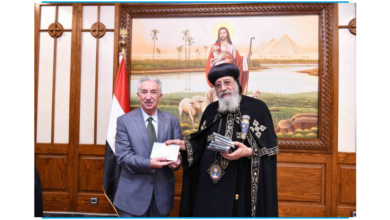
Joanna M. van Vliet, Ambassador of the Kingdom of the Netherlands addressed a speech on the occasion of the conclusion of the Gender mainstreaming project, that was implemented with the support of the Dutch Embassy.
Please find the text of the speech above.
Ladies and Gentlemen,
It is a great pleasure to be here today and it is good to see all of you present here, at the closing ceremony of the training for trainers for the Gender Mainstreaming project. Seeing so many committed people from different parts of the country, working for different organisations, assures me again that the development of human rights in Jordan is on the right track.
The promotion of human rights is one of the central components of the foreign policy of the Netherlands. This stems from the firm conviction that human rights apply always, everywhere and to everyone. A dignified existence is the right of every human being, regardless of nationality, culture or religion. To the Netherlands this means that promoting human rights does not stop at our borders.
At the same time we must be aware that effective change has to come from the inside. Local human rights defenders play a vital role in this process. They are in the best position to identify problems and address them in a manner that is suitable for the specific context of their country. Therefore, it was a pleasure to learn that due to the great number of promising applications, today I can present 28 instead of 20 motivated trainers their well deserved certificates.
I am confident that in the training you have learned much about gender mainstreaming, so I would like to tell you a little about the way it works in the Netherlands and in particular with my Ministry.
Since the World Conference in Beijing in 1995 the Netherlands has chosen to anchor emancipation in its policies. This has resulted in gender mainstreaming efforts, meaning re-organise, improve, develop and evaluate policy processes in such a way that gender equality is integrated in all policies and by all policy makers. It is a tool that aims to improve the quality of policies by structurally incorporating emancipation priorities.
An emancipation commission was established in 2004 to assess progress in this field. In its report of 2005 this commission commended the Ministry of Foreign Affairs with the incorporation of emancipation goals in the Development Cooperation policy, but also concluded that in other policy areas gender mainstreaming is still lacking or inadequate. Since then a lot has been done, to integrate emancipation also in other areas of our foreign policy. Important in this respect is the presentation of our new Human Rights Strategy in 2007, which places special attention to women rights and banning violence against women and children. Action plans were developed, followed by evaluation and reporting to the Lower House of Parliament. As part of this Strategy the Embassy is in the position to support several human rights activities, including the Gender Mainstreaming project implemented by Amman Center for Human Rights Studie and concluded today.
I am delighted to see that Jordan is making strides in its efforts to enhance women rights. We have witnessed progress in the level of political participation, for example with the appointment of 4 female ministers and quota for women in parliament. Economical independence and labour participation is still lagging behind, with an unemployment rate nation wide of 25,6%. An important development was the coming into effect of the Convention on the Elimination of all Forms of Discrimination (CEDAW) against women in 2007 and the lifting of two reservations (regarding movement of persons and freedom to choose residence) in 2009. Another major legislative step was taken with the adoption of the Protection from Family Violence Law in February 2008. Furthermore, the first government-run shelter was set up in 2007 and a Complaint Bureau was established in 2009. Gender Units have been set up within the Jordanian Ministries. And of course I should also mention here the establishment of the Jordanian National Commission for Women.
Women rights rank high on the list of priorities of the Government of Jordan. Establishment of institutions as well as amendments in legislation are important steps in realising these rights. It means a framework is being developed and processes and policies are on the way. At the same time we see that continuous attention to full implementation of rules and laws as well as further steps (like e.g. amendments on punishment of honour crimes, lifting outstanding reservations on CEDAW) are needed in order to have an effect in the daily life of Jordanian women.
It should be kept in mind that gender equality is not only in the interest of women themselves. Making up half of the world’s population, women need to be involved in every aspect of society and decision making. Women are essential in the development of every country and society.
However, it is a long process and with the Dutch developments in mind, I can assure you: we did not get there overnight either! Actually, we are still working hard in the Netherlands to further gender equality.
Ladies and gentlemen,
In conclusion, I would like to encourage you, the trainers, to keep believing in yourself. Be inspired by the numerous examples in Jordan and elsewhere and know that you are not alone. Many of us went through difficult times and situations, but by aiming high we were able to make a difference. It is not necessary to change the world: your assistance as trainers at the local level to help women believe in themselves is a major contribution to change.
It is therefore with pleasure that I would now like to present to you your certificates.
Shukran