June 4, 2009
The
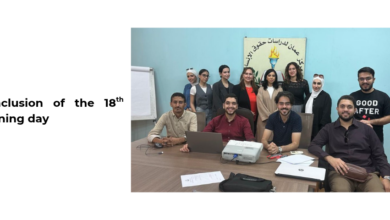
At the inauguration of the training session, Minister of Political Development Musa Al-Ma’aytah asserted the need for promoting and deepening the concepts and principles of human rights because of the important role they play in strengthening democratic practices in our government. Promoting a culture of human rights, he said, also contributes to our social and cultural development.
He explained that the Ministry of Political Development has been following a policy of openness toward civil society organizations and that it is seeking collaboration with these organizations to build productive relationships between the government and NGOS to build momentum for political development, the sovereignty of law, the advancement of a democratic culture, and active citizen participation in drawing up policies and implementing these policies in our dear country.
In the first training session, ACHRS Director Dr Nizam Assaf reviewed the historic development of human rights and human rights policies. His lecture described the classification of universal rights, which are divided by their nature into basic rights and other rights (classic and social).
Dr Muhammad Al-Tarawneh led the second training session, which considered the role of the electoral system in the protection of human rights. He asserted that an independent judicial system is a prerequisite for safeguarding individual rights. Moreover, he argued that the judicial branch of government should play an effective role in controlling the functions of the executive branch of government. He pointed out that popular and non-governmental organizations and all the local organizations involved in the work of human rights should be given proper backing and support by the government to carry out their work of protecting individuals from rights violations, guaranteeing that their rights are upheld.
Dr Al-Tarawneh said that it is important for each state to include the principles of human rights in their local legislation and to train judges and other persons working in judicial services to deal with human beings as possessors of individual dignity and value rather than treating them as simply defendants or convicts. He noted that the mere stipulation of the rights and freedoms in the constitution and the laws of the state does not guarantee that human beings in fact enjoy those stipulated rights and freedoms, particularly if the practical exercise of these rights and freedoms are violated by any party, and particularly when there is no competent authority to look into citizen’s complaints concerning their rights. He asserted that an individual should be referred to his natural judge and that these rights and freedoms should find their way to practical application.
Addressing the third training session, attorney Zaha’ Al-Majali discussed the role of national institutions and civil society organizations in bolstering human rights according to the laws in force and laws that will be issued, based on international rights standards, in the future. He noted that states should be encouraged to accede to the international conventions on human rights, to draft reports on the national level, and to look into the complaints of citizens against human rights violations and consistently follow up on actions in each of these areas.
Addressing the second day of the training session, Dr Nizam Assaf again spoke about elections and human rights. He pointed out that this relationship is based on the principle which says that the people are the source of power and that citizens are entitled to run the affairs of their own society and state in an open and democratic way. He also explained the international criteria for free and fair elections.
Addressing the second session also, journalist Yahya Shuqayr spoke about freedom of opinion and political expression in international and regional conventions. He pointed out the need for legislation which guarantees the freedoms of opinion and expression which are guaranteed in the constitution. He asserted that the constitution is the cornerstone of the public liberties in a country and an indicator of the level of these liberties.
In the last training session, journalist Manhal Al-Sidah spoke about the existing international mechanisms for the protection of human rights, which included binding and non-binding measures (Measure Number 1503 of 1970 on the infringement on human rights and public liberties, which means that the individual has the right to file a lawsuit against his state, and Measure number 1935 of 1997 on the appointment of a rapporteur who can request information and counsel on the violations and can make field visits).
Since its establishment 10 years ago, the ACHRS has held more than 300 training sessions on human rights in which well over 7,000 participants from