ACHRS Statement: Mohammad al-Ardah’s Hunger Strike
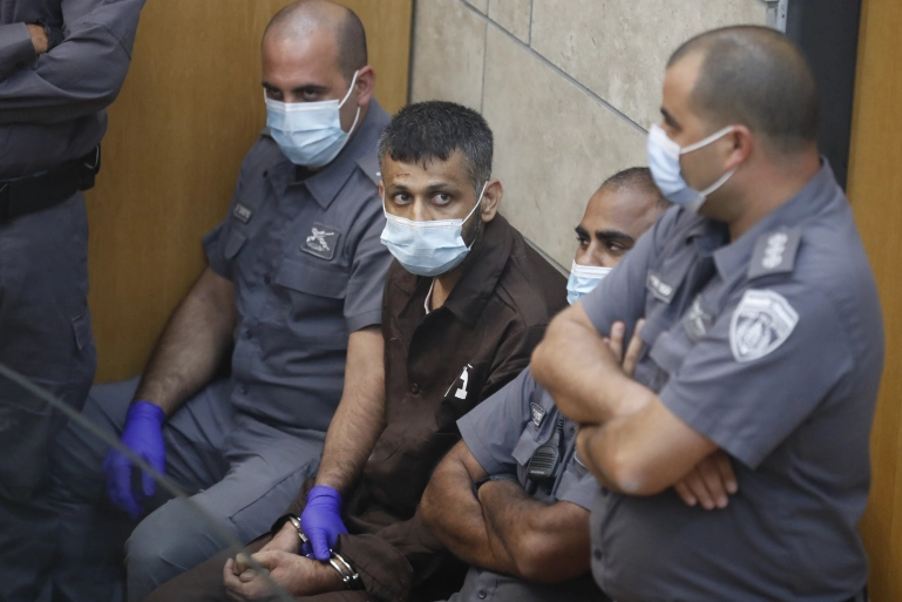
After escaping Gilboa prison and being detained again, Mohammad al-Ardah has been held in Asqalan Prison (Ashkelon) since September 28th 2021 in a cell without ventilation in conditions as harsh. Amman Center for Human Rights Studies condemns the use of torture employed, the cruelty of their treatment and urges prison authorities to provide humane conditions of detention.
Download our full statement or view as PDF
On October 4, 2021, Mohammad al-Ardah announced that he would begin an indefinite hunger strike to protest his harsh prison conditions and call for the abandonment of the punitive measures that were taken against him.
Mohammad al-Ardah has been held in Asqalan prison (Ashkelon) since September 28, 2021 in a cell without ventilation that does not meet basic human needs, in conditions described by the Palestinian Authority’s Commission of Detainees’ Affairs as “harsh”. He was one of the 6 escapees from the high security prison of Gilboa on September 6. Rearrested by the Israeli authorities on September 11, he has been placed in solitary confinement since his arrival. His lawyer Kareem Ajwa said that an internal hearing was held where the authorities imposed a “two-week solitary confinement on al-Adrah, a two-month ban on family visits and access to the canteen, as well as financial fines.”
Ajwa said that the Palestinian Authority’s Commission of Detainees’ Affairs would soon submit a petition to improve al-Ardah’s detention conditions, calling for a better cell and sufficient clothing.
The victim’s lawyer’s statement describes a treatment that could be considered a violation of the Convention against Torture and Other Cruel, Inhuman or Degrading Treatment or Punishment signed by Israel in 1986 and ratified in 1991.
Amman Center for Human Rights Studies condemns the cruelty of the treatment reserved to the prisoner Mohammad al-Ardah and his harsh detention conditions. We urge the Israeli authorities to lift the additional sanctions against prisoner Mohammad al-Ardah and to provide humane conditions. This includes compliance with the minimum standards for the treatment of prisoners, adopted by the first United Nations Congress in 1955, namely the possibility of receiving visits, the inclusion of ventilation in the room, release from solitary confinement, and access to the canteen.
Image Source: AlJazeera