International Humanitarian Law Unit
|

Coordinator: Dr. Mohammad Al-Tarawneh
In light of its relevance to Human Rights and with regard to the massive violations of human rights witnessed in the region, the International Humanitarian Law Unit was founded in support of achieving the Center’s objectives. The formation of this unit is further a result of the Center’s belief in the necessity of active participation of civil society institutions and was even more encouraged after the establishment of the Jordanian National Committee for International Humanitarian Law in 2001.
Unit Objectives:
To disseminate knowledge on International Humanitarian Law and its implementations To increase awareness and to educate in the field of International Humanitarian Law, through organizing training courses, seminars, workshops, and conferences To link between International Humanitarian Law and Human Rights, and to highlight similarities and common aspects To issue publications and periodicals on matters related to International Humanitarian Law To study and review national legislations with regard to their relevance to International Humanitarian Law, and especially with regard to the 1949 Geneva Conventions and the Protocol Additional to these Conventions
|
Research, Studies, and Surveys Unit
|

Coordinator: Dr. Lubna Bayouq
The unit carries out surveys and conducts researches and studies on theoretical and applicable issues of human rights with the aim of documentation and spreading information.
Unit Objectives:
-
To construct a data base on human rights issues to serve researchers and institutions
-
To organize workshops and study circles with the aim of increasing capacities of researchers in the field of human rights
-
To hold scientific seminars, conferences and discussion rounds, so as to contribute to the continuity of an informational flow between researchers and fieldworkers
-
To facilitate research studies in human rights, providing related information and all requirements to support field researches related to the Center’s field of interest
-
To offer scientific and research oriented consultation on issues of human rights to local and Arab organizations in cooperation with official and unofficial institutions
-
To monitor the progress of researches undertaken in the field of human rights studies by participating in networks, in periodical publications, and in conferences, and by further cooperating with national, Arabic, and international committees
-
To issue a scientific periodical on latest researches in the field of human rights
|
The Training Unit
|

Coordinator Attorney: Manhal Al Suidh
Training different groups of society on human rights and democracy is one of ACHRS main methods in pursuit of disseminating a culture of human rights. Therefore, the training unit is a fundamental pillar of ACHRS.
The unit consists of 25 trainers qualified in the fields of human rights, democracy and other relevant issues.
Unit Objectives:
- To disseminate a culture of human rights among the different segments of society through the organization of workshops and training courses
- To organize training of trainers courses (TOT) to increase the number of qualified trainers and to improve the skills of trainers
- To prepare training materials for both the facilitators and the participants
|
Women’s Rights Unit
|

Coordinator: Lawyer Amani Oweis
The women’s rights unit aims at the empowerment of women in public and political life. In pursuit of this aim the unit seeks to raise awareness among women on their constitutional and statutory rights under domestic laws.
Unit Objectives:
- To empower women to assume key decision-making positions
- To follow up and work on the development of domestic laws and legislations to incorporate women’s rights as manifested in the International Bill of human rights and international human rights conventions
- To encourage women to participate in political life and in community and parliamentarian elections
- To provide legal assistance
|
International Relations and Interns Unit

Coordinator: Filipe Dias Kalgaard
Unit Objectives:
- The International Relations and Interns Unit is assigned with the task of establishing relations with local, regional, Arab and international organizations and institutions.
- Coordinates research, and contacts of the ACHRS office in general, and ACHRS’ units with other institutions and organizations.
- The IRIU supervises the work of interns at the center.
|
Labour Education Unit
|

Coordinator: Mr. Salem Qbelat
The unit is formed by several leading unionists of recognized experience in the field of workers’ culture, and in local, Arabic, and international labor laws and legislations.
Objectives:
-
To raise awareness among workers on their rights as established in laws and legislations, including the freedom of association and the protection of their right to organize themselves in unions
-
To improve work and living conditions
-
To increase awareness of workers on the changing economic conditions, and on modifications of laws
-
To train workers on skills for collective bargaining negotiations with employers
-
To educating workers on conflict resolution and its relevant laws and procedures
-
To prepare studies and research papers on the labor movement, on unions, and on the impact of the establishment of industrial areas.
-
To organize advanced training courses for the unit’s trainers to improve their training skills
|
Election Unit
|
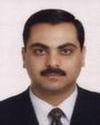
Coordinator: Attorney Zaha’ Al Majal
The ACHRS election unit aims at raising public awareness on the importance of elections, and of the international standards and principles of good electoral administration in enhancing democracy and strengthening human rights.
The unit further aspires to improve and develop the skills of staff involved in electoral processes, and to increase their efficiency through training courses on best international practices.
Unit Objectives:
- To establish an Arab center specialized in election studies and concerned with the documentation of materials relevant to elections in general, and to the Arab region in particular.
- To improve the skills and efficiency of administrative staff and various stakeholders involved in electoral processes in the region.
- To convene conferences and to organize workshops on basic concepts of elections and the techniques of good electoral conduct.
- To develop partnerships with international organizations and institutions specialized in electoral capacity building programs.
- To develop a positive culture of elections through constructive use of media and through the dissemination of related materials.
- To develop programs targeting special interest groups in the society, such as women, youth and political parties, in order to strengthen their role in the electoral process.
- To establish the “Arab Election Watch” as an independent and neutral foundation, uniting human rights and civil society organizations in Arab countries to monitor and observe local and regional elections and to report on the integrity, freedom and fairness of the respective elections.
|
Youth Rights Unit
|
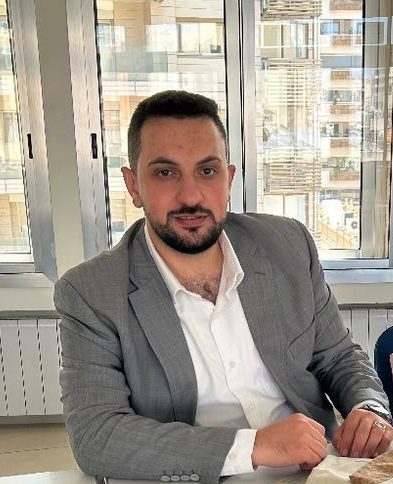
Coordinator: Husam AlMalahi
Unit Objectives:
- To support youth in developing abilities and skills in leadership, group work, training, communication, as well as in the management, organization, and planning of their own youth projects.
- To increase youth projects, in cooperation with national and international institutions for youth and students, to deepen society’s understanding of the relevance and importance of youth participation
- To establish a national network concerned with the rights of youth and students.
- To observe and document the main problems and difficulties facing youth
- To provide information and research studies with regard to issues related to youth and students.
- To construct a database on the situation of youth and students in Jordan, accessible for public review on the Internet.
|
Disability Rights Unit
|

Coordinator: Saja Asayreh
Unit Objectives:
- Raise awareness about the UN declarations and mechanisms related to the rights of persons with disabilities.
- Develop legislation and policies to ensure the full enjoyment of the rights of persons with disabilities.
- Guarantee the rights of persons with disabilities.
- Expanding social protection by integrating persons with disabilities into social safety net programs to meet their basic needs and ensure a dignified life.
- Changing negative stereotypes about persons with disabilities and promoting their participation and inclusion in various sectors and both public and private institutions.
- Strengthening participation in decision-making by ensuring the representation of persons with disabilities in national committees and councils to guarantee their effective involvement in policy development, decision-making, and implementation.
- Encourage official bodies to ratify the Optional Protocol to the Convention on the Rights of Persons with Disabilities.
- Monitor violations of the provisions of the International Convention on the Rights of Persons with Disabilities.
|
Digital Youth Rights Unit

Unit Coordinator: Mohamed Abuazzoum
Unit Objectives:
- Raising awareness among youth about their digital rights.
- Exploring the challenges and opportunities facing youth in the age of artificial intelligence.
- Highlighting the risks of community/social media on youth rights and digital security.
- Youth and digital security.
|
Justice and Rule of Law Unit
|

Coordinator: Obada Al Wardat
To promote justice sector reform, uphold the rule of law, and empower marginalized communities in Jordan and the wider Arab region through research, advocacy, and capacity-building.
Unit Objectives:
- Guarantee Access to Justice – ensure equal and affordable access to justice for all, especially vulnerable groups such as youth, women, migrants, and marginalized communities.
- Strengthen Judicial Independence – advocate for impartial courts, separation of powers, and protection against political interference.
- Promote Accountability & Anti-Corruption – establish monitoring mechanisms, enhance transparency, and fight corruption within justice institutions.
- Advance Human Rights Protection – integrate rule of law principles with human rights advocacy, ensuring laws safeguard freedoms and dignity.
- Support Transitional & Restorative Justice – document violations, foster reconciliation, and promote victim-centered approaches in post-conflict contexts.
- Produce Research & Policy Recommendations – generate evidence-based studies, reports, and proposals to guide reforms and influence decision-makers.
- Empower Youth & Build Capacity – train young defenders, legal professionals, and civil society actors in advocacy, monitoring, and litigation skills.
|
